


Olivier Trendel
Senior

How can we better understand the societal challenges shaping the Grenoble metropolitan area? Created in 2020 by GEM, the Grenoble Regional Research Panel provides researchers with a unique research infrastructure in France to explore contemporary issues affecting Grenoble Alpes Métropole. By engaging residents from its 49 municipalities, the panel generates robust data to inform public and private decision-making and to advance place-based scientific research.
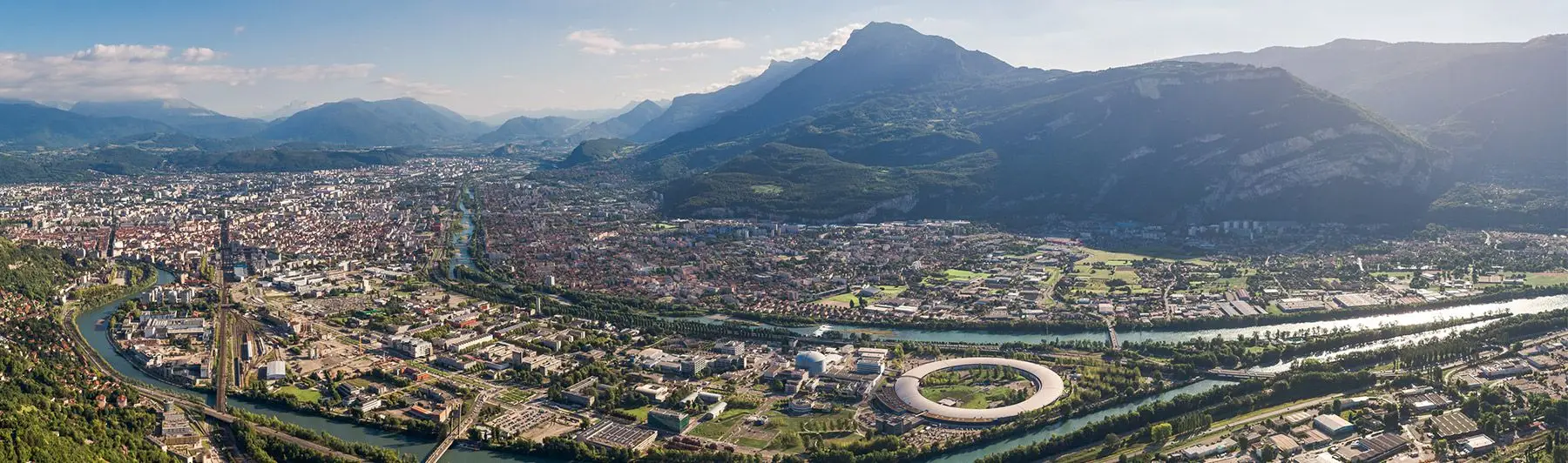
The Grenoble Regional Research Panel is a participatory research initiative developed by GEM to track changes in perceptions, practices and expectations among residents of Grenoble Alpes Métropole. Designed to support academic research through the production of high-quality data, the panel enables in-depth analysis of social dynamics and local contexts. Open to residents of all 49 municipalities, it supports the implementation of recurring surveys based on rigorous methodology and ensures that all studies are strictly scientific, non-commercial and non-political. The panel serves as a strategic resource for advancing academic knowledge and strengthening dialogue with local stakeholders.
Joining this panel gives you the opportunity to participate in GEM professors’ research projects on current local issues. The Grenoble region is unique: it has its own assets (dynamic business base, proximity to the mountains…) but also faces very specific problems (traffic, bowl effect…). The Panel’s studies take these specific features into account, helping to test or propose possible solutions.
To take part in the Panel, you must live in one of the 49 communes of Grenoble Alpes Métropole and be at least 18 years old. Only one person per household may join the Panel. GEM employees and students may not take part in the Panel.
The Research Panel aims to contribute to scientific knowledge by:
Participation in the Research Panel is based on voluntary registration by residents aged 18 and over living in one of the 49 municipalities of Grenoble Alpes Métropole. Registration is completed online via an initial questionnaire used to build a diverse and representative sample. To ensure scientific neutrality, only one person per household may participate, and GEM staff members and students are not eligible.
Once registered, panel members receive several invitations per year to take part in surveys addressing topics such as mobility, consumption, air quality, health and ecological transition. Most studies are conducted online, although some may require occasional on-site participation at GEM’s Grenoble Alps campus. Each survey is reviewed and approved by a Scientific Advisory Board to ensure methodological rigor, ethical standards and data quality.
Participation is entirely voluntary at every stage and includes compensation proportional to the time required. All data are processed in full compliance with GDPR regulations and are used exclusively for academic or policy-oriented research.
To join the panel, click the link below to create an account. You will be asked to complete a short registration questionnaire (approximately 5 minutes), enabling us to invite you only to studies relevant to your profile.
The Grenoble Regional Research Panel produces longitudinal data on residents’ behaviors, perceptions and expectations across the Grenoble metropolitan area. It provides a unique infrastructure for studying locally grounded issues and social dynamics, testing hypotheses and advancing applied research methods in the social sciences, public policy analysis and regional studies. Researchers can track changes over time and compare population groups, contributing to a stronger empirical understanding of local contexts.
Participation in the panel raises important questions related to civic engagement, representation of public opinion and understanding residents’ lived experiences. Access to survey findings and transparency in research processes foster constructive dialogue between researchers and citizens and support the development of public policies that better reflect societal needs and expectations.
Public authorities and economic stakeholders can use panel data to support evidence-based decision-making and develop initiatives better aligned with local realities. Panel findings contribute to place-based innovation, improve service design and support the development of practical solutions for municipalities, public institutions and companies operating within the metropolitan area.
The Grenoble Regional Research Panel is structured around four research areas, each supporting the implementation of dedicated studies.
This research area examines how residents of Grenoble Alpes Métropole perceive climate-related challenges and air quality issues at the local level. It focuses on heatwaves, pollution episodes, mobility-related carbon footprints, adaptation strategies and the social acceptability of public policies supporting ecological transition.
This area analyzes everyday mobility and leisure practices, as well as how residents engage with urban and mountain environments. It explores modal choices, inequalities in access, behavioral change during disruptive events (such as lockdowns), and the effects of public measures on mobility patterns, place attachment and everyday spatial practices.
This area investigates changes in health experiences and access to care in relation to digital innovation. It examines the use and perception of tools such as telemedicine, conditions of trust, and their effects on patient–provider relationships, access to care and health inequalities within the Grenoble metropolitan area.
This area focuses on forms of civic engagement and residents’ perceptions of public action at the local level. It examines responses to institutional labels and initiatives linked to ecological or social transition (e.g. European Green Capital), and their effects on sense of belonging, local pride, trust in institutions and pro-environmental or civic behaviors.
Since 2020, the Grenoble Regional Research Panel has conducted several surveys each year. Findings are disseminated through scientific reports and publications, available either upon request or through open access. Some studies are carried out in collaboration with the Transitions Barometer, led by the Local Sustainability Transition and Well-being Chair.
Conducted as part of the “Barometer of Transitions,” this survey analyzes household behaviors in relation to waste and consumption issues, intersecting environmental perceptions with practices of waste reduction, repair, and reuse. The aim is to identify operational levers for the circular economy.
Conducted as part of the “Barometer of Transitions,” this survey studies the evolution of funeral practices in light of environmental issues, analyzing burial choices, associated practices, and ecological perceptions of cemeteries as spaces of transition.
Conducted as part of the “Barometer of Transitions,” this survey examines territorial and social inequalities related to exposure to environmental nuisances (noise, pollution) and access to daily needs, with a focus on mobility and residential environment.
Carried out as part of the “Barometer of Transitions” at two contrasting times, these surveys analyze domestic and swimming water use in the Grenoble metropolitan area. They study cooling practices, perceptions, inequalities, and the acceptability of water use in urban settings. Survey results available on request.
Conducted as part of the “Workshop of Futures,” a forward-looking platform for local public actors, and the “Barometer of Transitions,” this survey analyzes the perception of ecological, social, and economic risks by elected officials, economic actors, and residents. It contributes to the annual report on risks and resilience (RARRe) and aids local public decision-making. RARRe Report in French
This survey explores environmental perceptions, waste volumes produced, and practices related to repair, second-hand goods, and consumption, as well as the understanding of Extended Producer Responsibility (EPR) schemes. Survey results available on request.
This study analyzes the impact of communication regarding the carbon footprint of a weekend trip to the mountains on short stay choices and residents’ decision-making. Results of the study on short stays in the mountains, in French
Conducted as part of the “Barometer of Transitions,” this survey provides an overview of environmentally related lifestyles, analyzing mobility, food, household equipment, and waste management practices at the territorial level. Results of the Ecological Practices survey, in French
This study analyzes the knowledge, perceptions, and behaviors of residents in the Grenoble metropolitan area regarding air quality and pollution episodes, as well as their reactions to communication initiatives. Results of the Air Quality study 2022
This survey examines residents’ reactions to the awarding of the 2022 European Green Capital label and analyzes its effects on citizen engagement, territorial pride, and climate-positive behaviors. The study was conducted in collaboration with the Fraunhofer Institute for Systems and Innovation Research (Karlsruhe, Germany) and supported by the German Federal Ministry of Education and Research (grant no. 01LA1813C). Results of the study on Climate Engagement in Cities 2021, in French
This study analyzes the use and perception of telemedicine among residents of the Grenoble metropolitan area, as well as the impact of COVID-19-related lockdowns on its adoption. Results of the Telemedicine study 2020, in French
This survey explores residents’ perceptions and practices regarding heatwaves and analyzes the strategies implemented to mitigate their daily impacts. Results of the Heatwaves study 2020, in French
This study analyzes the evolution of mobility practices before, during, and after the lockdowns, identifying levers to promote more sustainable mobility. See the report in French
Infographic on the Mobility Practices study 2020, in French
Olivier Trendel, Professor at Grenoble Ecole de Management and member of the Consumer Behavior Research Team. His research focuses on consumer persuasion and misinformation, services marketing, and food-related beliefs and behaviors, with particular attention to automatic information-processing mechanisms and implicit cognition.
Olivier Trendel, Professor at Grenoble Ecole de Management and member of the Consumer Behavior Research Team. His research focuses on consumer persuasion and misinformation, services marketing, and food-related beliefs and behaviors, with particular attention to automatic information-processing mechanisms and implicit cognition.