


Finance, Innovation and Governance
The Finance, Innovation and Governance team studies how finance can support the major recent transitions: climate and energy, demographic and digital. Its work covers sustainable finance, the financing of innovative firms, financial innovation and risk management. It gives companies, investors, insurers and regulators reliable evidence to decide, invest and govern responsibly in a fast-changing economic and technological environment.

Updated on 07/10/2026
Missions of the Team
The mission of the Finance, Innovation and Governance (FIG) team is to produce rigorous and useful research on the financial decisions of companies, investors and households. In line with GEM’s EAGLE 2030 strategic plan, it connects finance with science and technology and puts its analyses at the service of transitions, for a more sustainable, innovative and resilient economy.
Objectives
The Finance, Innovation and Governance – FIG research team aims to:
- Measure the reliability of ESG ratings and the effects of green bonds on companies’ cost of financing and environmental practices.
- Understand how investment decisions are made: how venture capital funds select start-ups, how groups allocate resources across their businesses, how technology firms are valued.
- Evaluate the effects of financial innovations (blockchain, decentralised finance, AI) on company performance.
- Model how risks linked to longer lives and climate disasters are shared and priced: retirement, insurance, reinsurance.
- Analyse the legal and regulatory framework of insurance and finance: insurance law, compliance obligations, coverage of climate risks, accounting standards.
- Share its findings with companies, policymakers and students.
The FIG Team's Research Areas
The FIG team’s work is organised around five complementary themes. Its research helps to understand and anticipate changes in corporate finance, financial markets and the societal impact of financial decisions. It contributes to the two scientific priorities of the EAGLE 2030 plan: Sciences, by connecting management with technological advances, and Transitions, by contributing to a sustainable future.
How can finance accelerate the ecological transition? The team studies the ESG ratings given to companies: how they are built, why they differ from one rating agency to another, and how investors can use them. It analyses the market for green and sustainable bonds, issued by companies and local authorities alike, and questions the real value of certifying them. It also examines companies’ exposure to climate risk and their efforts in green innovation. This work helps executives, investors and public authorities identify credible commitments.
Technology companies rely heavily on venture capital. Investors review a very large number of proposals and fund only a few: the team analyses how they make these choices, and how the composition of boards of directors then shapes start-up growth. It looks at the value of digital and high-tech companies, which is hard to estimate with standard methods, and at mergers and acquisitions in these sectors. Finally, it studies how large groups decide to invest and allocate resources across their businesses, taking risk into account. This research is aimed at entrepreneurs, executives and those who finance innovation.
Blockchain, artificial intelligence, platforms: technology is reshaping financial services. The team studies decentralised finance and its practical uses (digital assets, automated contracts, new forms of collective retirement savings), as well as the effect of blockchain adoption on companies’ environmental and social performance. It looks at automated financial advisers and what they change for households: understanding of products, retirement planning, access to responsible investment. It also develops methods based on artificial intelligence to value complex financial products. The aim: to identify the innovations that are truly useful and to measure their risks.
Living longer, facing more frequent climate disasters, getting through financial crises: these are risks that must be measured, shared and financed. The team studies the financing of retirement and long-term care (annuities, collective savings, releasing the value of older people’s homes) and the decisions savers make when faced with these products. It analyses the role of insurance and reinsurance in the face of climate change, and the effects of rules designed to preserve the stability of the financial system. It also designs risk management tools that remain reliable when data are incomplete or models uncertain. This work is aimed at insurers, investors, regulators and households.
The accounts and indicators that companies publish guide the decisions of investors, banks and analysts. The team studies the quality of this information, how companies present it (earnings, performance indicators, environmental and social data) and how its perceived by investors. It also examines the role of accounting inside the company: managing performance, supplier relationships, governance. Finally, it looks at accounting rules themselves and their effects on companies and society. This work is aimed at finance departments, auditors, investors and standard setters.
“Finance shapes the future by directing capital towards the projects that drive growth and development. Our research helps companies, investors and policymakers make better-informed decisions for a more innovative, sustainable and resilient economy.”
– Jamil Jaballah, FIG team
Course Content
Members of the FIG team teach and supervise dissertations and theses in the following GEM programmes:
- Programme Grande École (PGE) – Master in Management
- MSc Finance and Investment Banking
- MSc Sustainable Financial Management
- MSc Financial Markets and Risk Management
- MSc Accounting, Auditing and Performance
- Doctoral programs: PhD and DBA
Current Research Projects and Partnerships
The team’s work on sustainable finance, local public finance and equitable risk sharing echoes the themes of the Local Sustainability Transition and Well-being Chair. It also ties in with the priorities of the Energy for Society Institute, dedicated to climate and energy transitions, and of the Moving Mountains Institute.
The team’s current projects are carried out with co-authors from French and international universities. They focus in particular on green and sustainable bonds, ESG ratings, venture capital, decentralised finance and insurance against climate and longevity risks.
Coordination
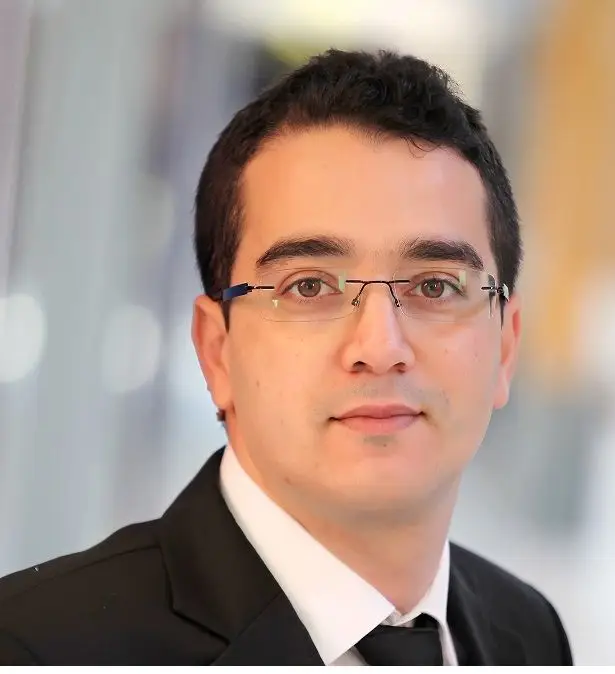
The FIG team is coordinated by Jamil Jaballah, Professor of Finance at Grenoble Ecole de Management. His research covers corporate finance and sustainable finance: green and sustainable bonds, companies’ exposure to climate change, green innovation and patents, environmental and social performance, and corporate governance.
Key words
Sustainable finance, ESG ratings,Green bonds, climate risk, Venture capital, Company valuation, Governance, Blockchain and Decentralised finance, Artificial intelligence, Risk management, Insurance and Retirement, Longevity.