
GEM publishes its fourth Société à Mission report and reaffirms its role as a catalyst for transitions

An independent audit conducted by KPMG confirms that GEM is implementing its social, environmental, and educational mission with determination, in line with the ambitions of its société à mission status (equivalent to a B Corp company). The assessment also validates the alignment between the School’s concrete actions and its EAGLE 2030 strategic plan. Building on this recognition, GEM has published its fourth société à mission report (French), highlighting its commitment and illustrating how its purpose is translated into concrete actions.
A report built on transparency and action
As the first French business school to adopt a Société à Mission status in 2021, GEM continues its pioneering commitment to transition, which began in 2006. The report presents progress on all CSR and sustainable development objectives: educational transformation, scientific output, internal practices, local and international partnerships, while setting out the trajectory for the coming years.
A clarified purpose reflecting on GEM’s mission
« Drawing on our expertise in Innovation Management, our ability to anticipate and support major transitions through impact-driven research, and our close connections with ecosystems, we offer an educational experience designed to train change-makers capable of helping organizations find solutions to the major economic, ecological, and societal transitions.»
Mobilizing students, employees, and partners
Because positive impact is built collectively, GEM mobilizes its entire ecosystem around its purpose :
Sustainability Olympiads
GEM is launching the 3rd edition of the Sustainability Olympiads, a major inclusive initiative that brings together students, employees, and partners over several weeks through workshops, webinars, podcasts, and immersive content. A true living lab for the transition, the Olympiads combine theory, hands-on experiences, and concrete initiatives, recognized through open badges.
Impact GEM : 20 Years of Student Action
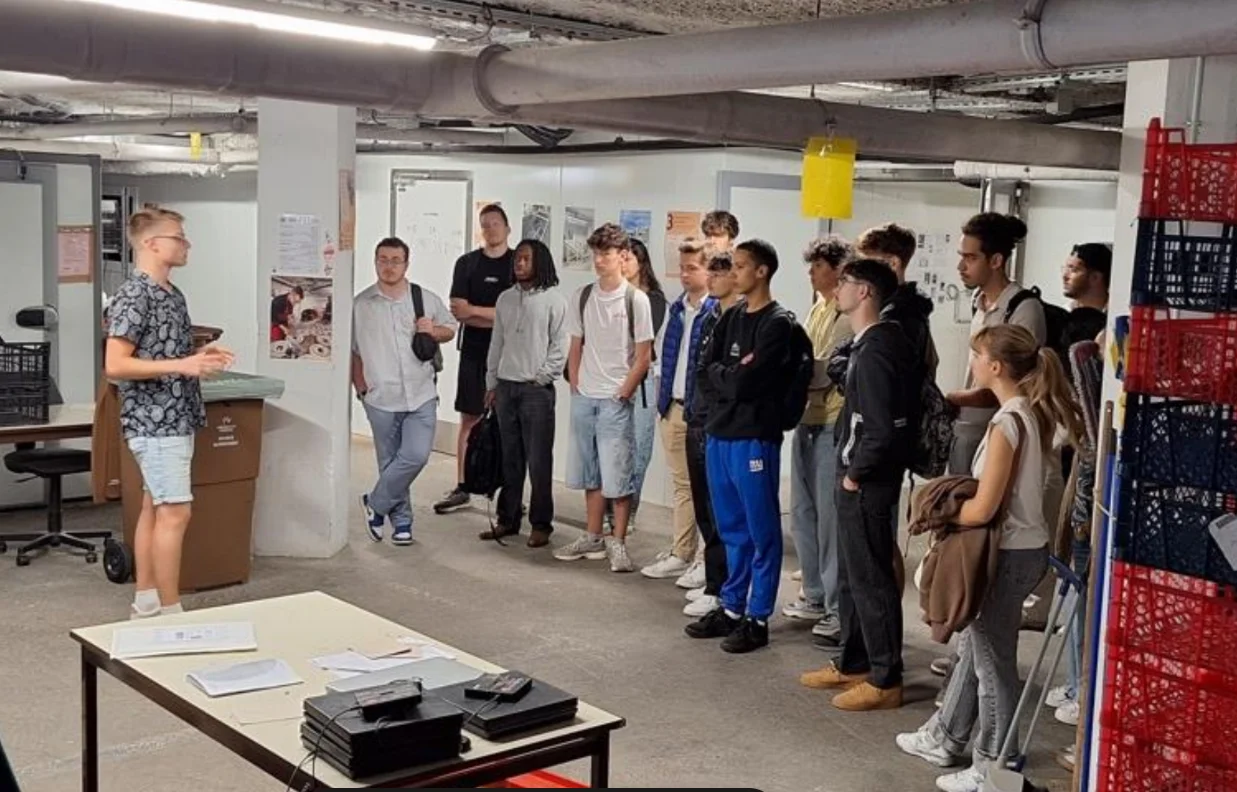
Since 2006, Impact GEM has been a flagship student association, committed to raising ecological and social awareness within the school and across the Grenoble area. It coordinates eight key projects dedicated to environmental, social, and economic transition, such as the Ethical Finance division, which promotes responsible and inclusive finance, and the Responsible Entrepreneurship division, which each year rewards the best local start-ups and associations. Over the past two years, its Consulting Division has conducted GEM’s carbon footprint assessment, analyzed the results, and made recommendations to the executive management. Its president now sits on the Mission Committee, further strengthening student integration in governance.
Mission committee: coherence and experimentation
The Mission Committee brings together experts from business, sustainable finance, green innovation, and academia. Among them are Joël Tronchon, VP Sustainability at L’Oréal; Katie Werquin-Wattebled, Regional Director for Auvergne-Rhône-Alpes at the Banque de France and National Head of Equality & Diversity; and Xavier Olagne, Vice-President of ENTPE. The full list of Mission Committee members is available in the société à mission report. The Committee supports the school by analysing the coherence between its strategic ambitions, the actions implemented, and the real impact achieved.
EAGLE 2030: a strategic plan that embodies the mission
The EAGLE 2030 Plan is built around three pillars: Sciences, Transitions, and the Journey. The latter, a guiding thread throughout every program, leads students through six key stages (envision, immerse, wonder, reflect, transform, and share) to develop the core skills of the leaders of 2040: creativity, strategic imagination, critical thinking, and ethical
reflection.
For the past two years, this pedagogical journey begins at the start of the academic year with Sustainability Day: 1 500 students explore transitions through mountain immersions, meetings with scientists and local professionals, and workshops focused on climate impact. Throughout the curriculum, every discipline now examines its links to transitions and engages students in building concrete solutions.
A school that trains agents of chang