


Research
The research conducted by the Energy for Society Chair examines the economic, social, and political dynamics of the energy transition. It provides evidence-based insights to support public and private decision-makers in designing effective, sustainable, and socially accepted energy projects.

Presentation
Since its creation, the Energy for Society Chair has developed multidisciplinary research aimed at understanding the dynamics of the energy transition. The work combines qualitative methods (semi-structured interviews, case studies) and quantitative approaches, using representative surveys and large datasets. The research explores citizen behaviours and perceptions, the drivers of contestation and social acceptance, as well as the strategies implemented by companies to integrate environmental issues into their decisions and business models. This comprehensive approach produces actionable recommendations for public and private decision-makers to design sustainable, efficient, and socially accepted energy projects.
Research Cycle 2022–2025: Studying Social Support & Acceptance of Energy Projects
Social Acceptance of New Energy Infrastructures: A Key Challenge for the Transition
As France lags behind in the deployment of renewable energy and local opposition increases, a nuanced analysis of social acceptance has become a central issue of the energy transition. For the past three years, the Energy for Society Chair has conducted a series of studies mobilising economic analysis tools and business model research to better understand perceptions, resistance factors, and levers of acceptance. This research aims to guide public and private stakeholders in designing fairer, more understandable, and genuinely shared energy projects.
Our research shows that trust in institutions is a major determinant of the social acceptance of renewable energies: in the case of wind power, support or rejection varies significantly depending on citizens’ political orientation, while recent institutional instability has amplified opposition. It also reveals that, as seen with methanisation—where support strongly depends on local involvement and value sharing—resistance can be reduced through clear, contextualised communication and governance and redistribution mechanisms perceived as fair.
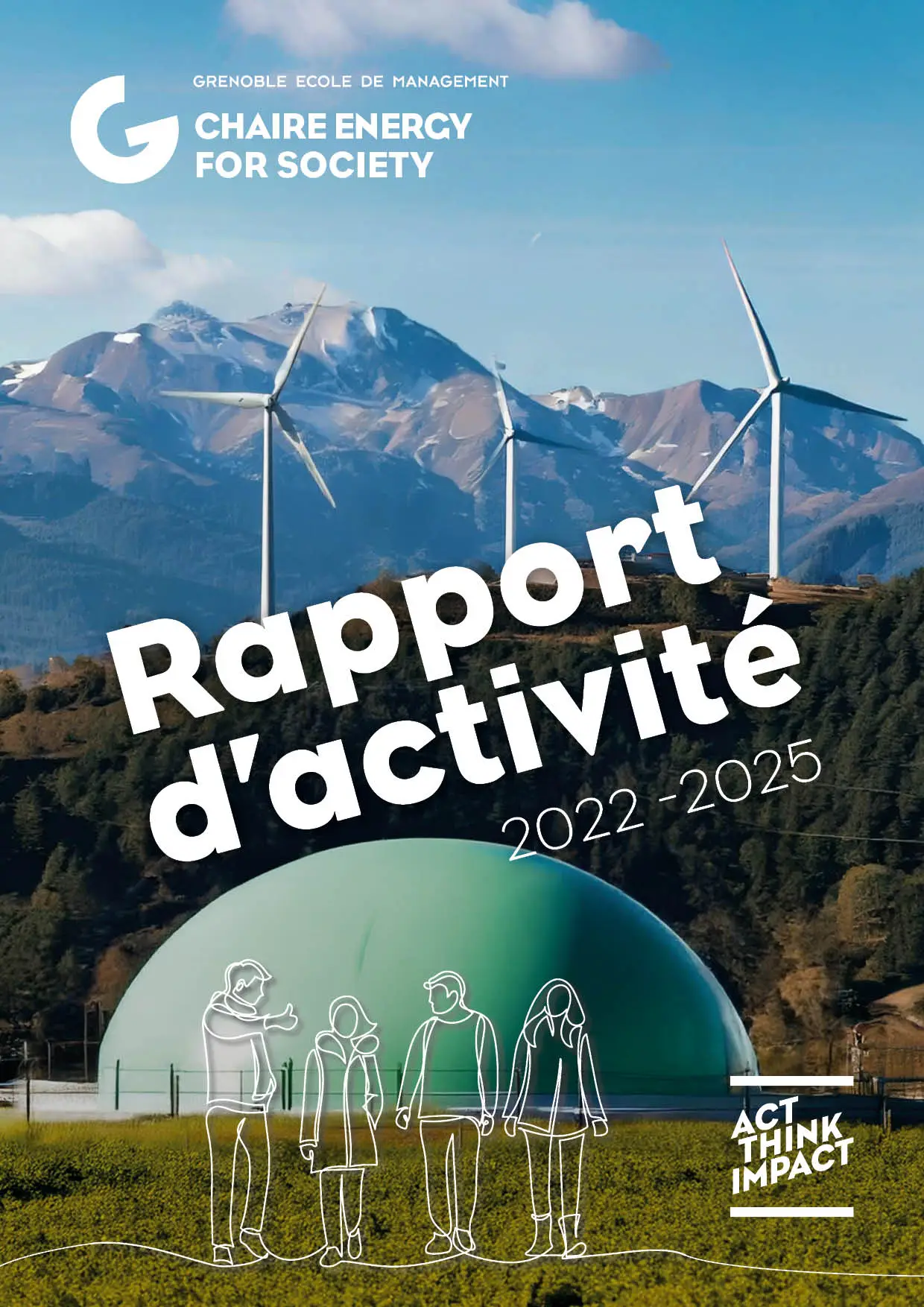
Activity Report 2022-2025
Drastically reducing greenhouse gas emissions requires strong public support for renewable energies. Using economic analysis tools and business model research, the Energy for Society Chair explores citizens’ perceptions, sources of resistance, and motivations regarding renewable energy development. The report and its summary are in French.
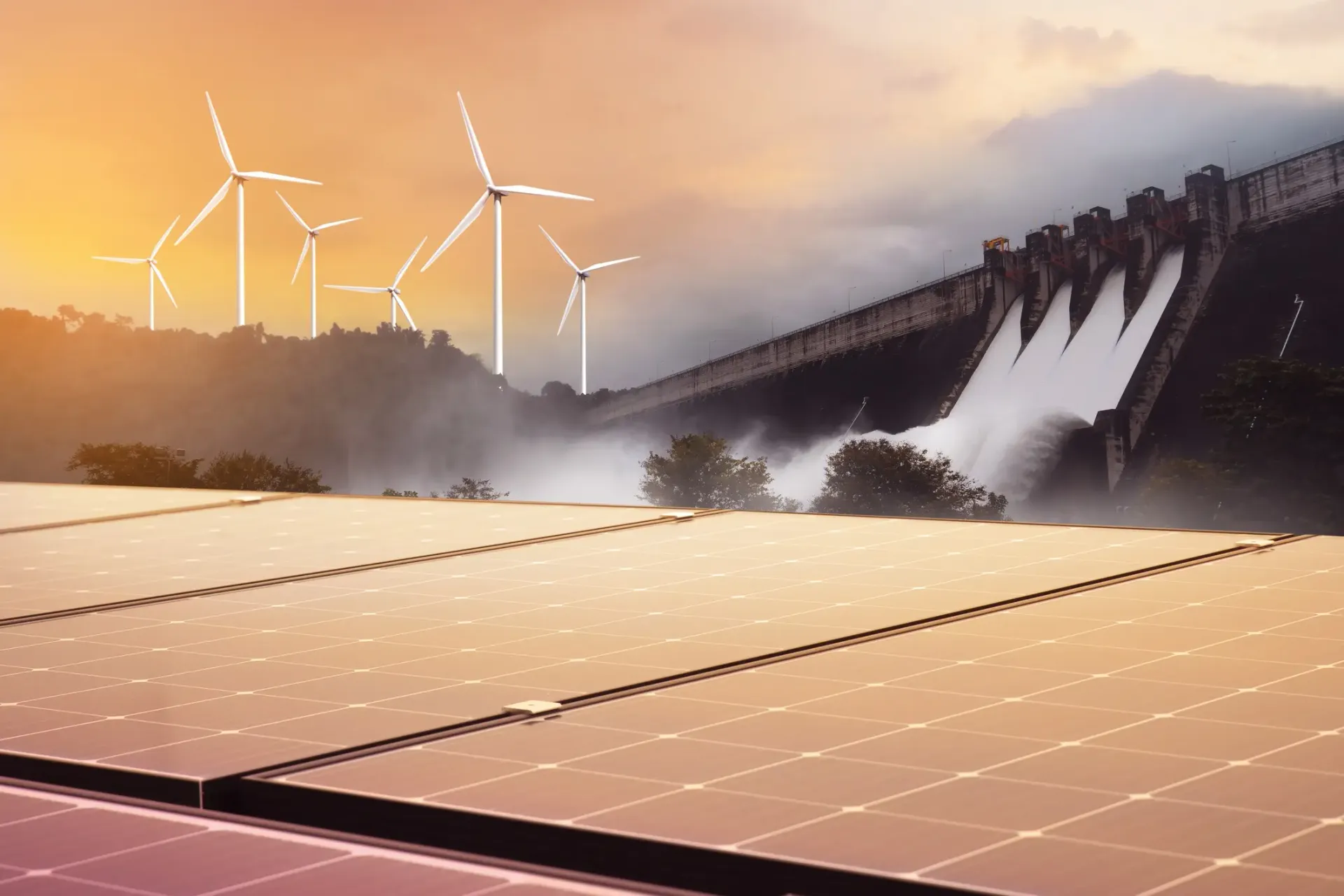
GEMExpert – “Mobilize all renewable energies, not pit them against each other”
With the recent publication of its 2022–2025 activity report, the Energy for Society Chair at Grenoble Ecole de Management reiterates that achieving carbon neutrality requires the use of all renewable energy sources. The report also explains why not all renewables are perceived as equally “acceptable” by citizens and are often viewed as competing rather than complementary.
Project 1: Evolution of Public Image and Support for Energy Infrastructure Projects — Nuclear vs. Wind Power in France
The question of the energy mix—and thus of decarbonised energy sources needed to mitigate climate risks—is the subject of intense controversy in French society. Influential narratives have emerged in mainstream media (social networks, newspapers, etc.), attempting to promote the superiority or inferiority of different energy infrastructures. In this context, this research analyses how the energy transition is portrayed in the press, focusing on narratives related to nuclear and wind energy in France.
Related contributions:
- Nuclear, wind: how has media discourse evolved in France? – in French, Sebi C., Bally F., The Conversation, 2023
- Academic publication: “Shifting public perception: A longitudinal analysis of national and local media narratives on nuclear and wind energy in France”, Sebi C., Bally F., Technological Forecasting and Social Change, 2025
Project 2: Social Acceptance of Energy Projects Through Business Models — The Case of Methanisation
The implementation of new energy infrastructures (such as biogas plants) faces several obstacles, including low acceptance from local populations, which may prevent projects from moving forward and generate significant additional costs. Understanding the root causes of this lack of support—and what can improve it—is essential for designing new business models (BMs) that enable the energy transition. We assume that business models requiring a social license to operate differ from those that do not. This research aims to identify the distinctive features of these models, which we refer to as Business Models for Acceptability (BMfA), and to outline strategies that can strengthen them.
Related contributions:
- Methanisation: significant potential under certain conditions – in French, Les Echos, 2023
- GEM News: A new project for the Energy for Society Chair, Interview with Eduardo Mendez Léon
- GEM News: Local areas as the frontline of the energy transition
Project 3: Understanding and Improving Household Acceptance of Decarbonised Energy Infrastructure — The Case of Onshore Wind
Household support for decarbonised energy infrastructures depends on complex cognitive and social factors. The Chair studies the extent to which individuals resist information about low-carbon energies when it contradicts their beliefs or social identity, with a primary focus on onshore wind power.
The Chair also examines the effects of financial incentives on local residents’ acceptance of energy infrastructures, especially onshore wind farms. A field experiment evaluates the impact of different financial measures on acceptance levels under real conditions, subject to feasibility and access to experimental sites.
Related contributions:
- Wind energy: why does it divide so much?, Les Echos, 2024 – In French
- Academic publication: Fanghella V., Schleich J., Sebi C., “Populism and support of onshore wind energy”, Ecological Economics, 2026
- Working paper: “Beyond the single binary choice format for eliciting willingness to accept…”, Fanghella, Fezzi, Schleich, Sebi
Research Cycle 2019–2022: Energy Innovations & Transition Strategies
Innovative Energy Strategies and Services
Climate change, the Covid-19 crisis, energy dependence, and rising inequalities—recent crises offer critical turning points to rethink the energy transition. In this context, the Energy for Society Chair explored the technological and behavioural levers to accelerate the transition during its first research cycle.
Two recent projects illustrate this approach: The first examines the co-creation of new energy services between public and private actors, balancing economic attractiveness with citizen acceptance, based on 52 semi-structured interviews. The second focuses on energy retrofitting of private co-owned housing, using a representative survey of 1,268 homeowners to produce concrete recommendations for public policy and local stakeholder engagement.
2021 Activity Report
In 2021, the Energy for Society Chair examines the organizational and economic conditions of the energy transition. Its research focuses on the co-creation of innovative energy services—particularly in hydrogen—and on new mechanisms to accelerate energy renovation in private co-owned residential buildings. The report is in French.
Project 1: Co-creating Innovative Energy Services — The Case of Hydrogen
Successful energy transition requires considering the interests and constraints of all stakeholders, meaning society as a whole. Each actor must have a specific role, while the pivot actor is responsible for federating the stakeholders around a transition project. This research analyses the role of the pivot actor and the related organisational models. Through case studies, the Chair explores new cooperation models and identifies how heterogeneous partners (public, private, competitors, or complementary actors) can successfully co-create innovative energy services.
Learn more:
Related contributions:
- Academic publication, Vernay A-L., Sebi C., Moratal N., “Shared Leadership Between Public and Private Leaders in Sustainable Ecosystems” , Business Strategy and the Environment, 2025
- Op-ed — Hydrogen: “Building regional networks means moving forward despite major uncertainties” – in French, Le Monde, 2020
- Energy Market Barometer 2021 results, Hydrogen sector development: which uses to prioritise? What challenges ahead? – In French
Project 2: Energy Renovation — A Major Challenge for the Energy Transition
Energy renovation is a major challenge for the energy transition in France and Europe. Despite over ten years of dedicated programmes, results remain limited. How can we change practices to ensure obstacles don’t undermine the real potential for energy savings and greenhouse gas reduction? This research tests new services that could accelerate renovation in private co-owned buildings.
Learn more:
Related contributions:
- Roundtable replay – in French, Renovation: a question of financing, Renodays 2023
- GEM News, Summary: Co-owners and energy renovation works
- Webinar – in French, Research results presentation, July 2022
• Academic publication: Fanghella V., Guetlein M-C., Schleich J., Sebi C., Resource and Energy Economics, 2023 - Energy Market Barometer 2022, Energy renovation in France: a market driven by regulations – in French
Energy Communities: Business Models & Citizen Participation
Citizen energy communities offer a strategic field of study to understand how local involvement can transform renewable energy deployment and support the energy transition.
In France, these initiatives generate growing interest, both for their potential to produce green electricity and for their role in strengthening citizen engagement and acceptance. Data collected in 2018 and 2020 enabled an in-depth analysis based on a mixed-method approach combining case studies, business model analysis, and surveys among relevant stakeholders.
This research highlights the conditions for success, economic and social impacts, and the levers that strengthen their contribution to the energy transition—offering concrete insights for decision-makers and project leaders.
Learn more
- GEM News, Business models and impact of energy communities in France
- GEM News, Citizen energy communities in France: current landscape and roadmap
Related academic contributions
- Sebi C., Vernay A-L., “Community renewable energy in France: The state of development and the way forward”, Energy Policy, 2020
- Vernay A-L., Sebi C., “Energy communities and their ecosystems: A comparison of France and the Netherlands”, Technological Forecasting and Social Change, 2020
- Vernay A-L., Sebi C., Arroyo F., “Energy community business models and their impact on the energy transition: Lessons learnt from France”, Energy Policy, 2023
- Vernay A-L., Olsthoorn M., Sebi C., Gauthier C., “The identity trap of community renewable energy in France”, Energy Policy, 2023
- Guetlein M-C., Schleich J., “Empirical insights into enabling and impeding factors for increasing citizen investments in renewable energy communities”, Energy Policy, 2024 – Elsevier
- Guetlein M-C., Schleich J., “Understanding citizen investment in renewable energy communities”, Ecological Economics, 2023, Elsevier